
MOISTURE CONTENT
Deep Dive on Moisture Content
In Dehydrated Foods
Moisture content one of the most crucial factors in the dehydration process. Moisture indicates the amount of water present in a food product. This varies significantly by different types of foods.
Influencing the dehydration technique and duration is required to achieve optimal dryness and quality.
High Moisture Content Foods
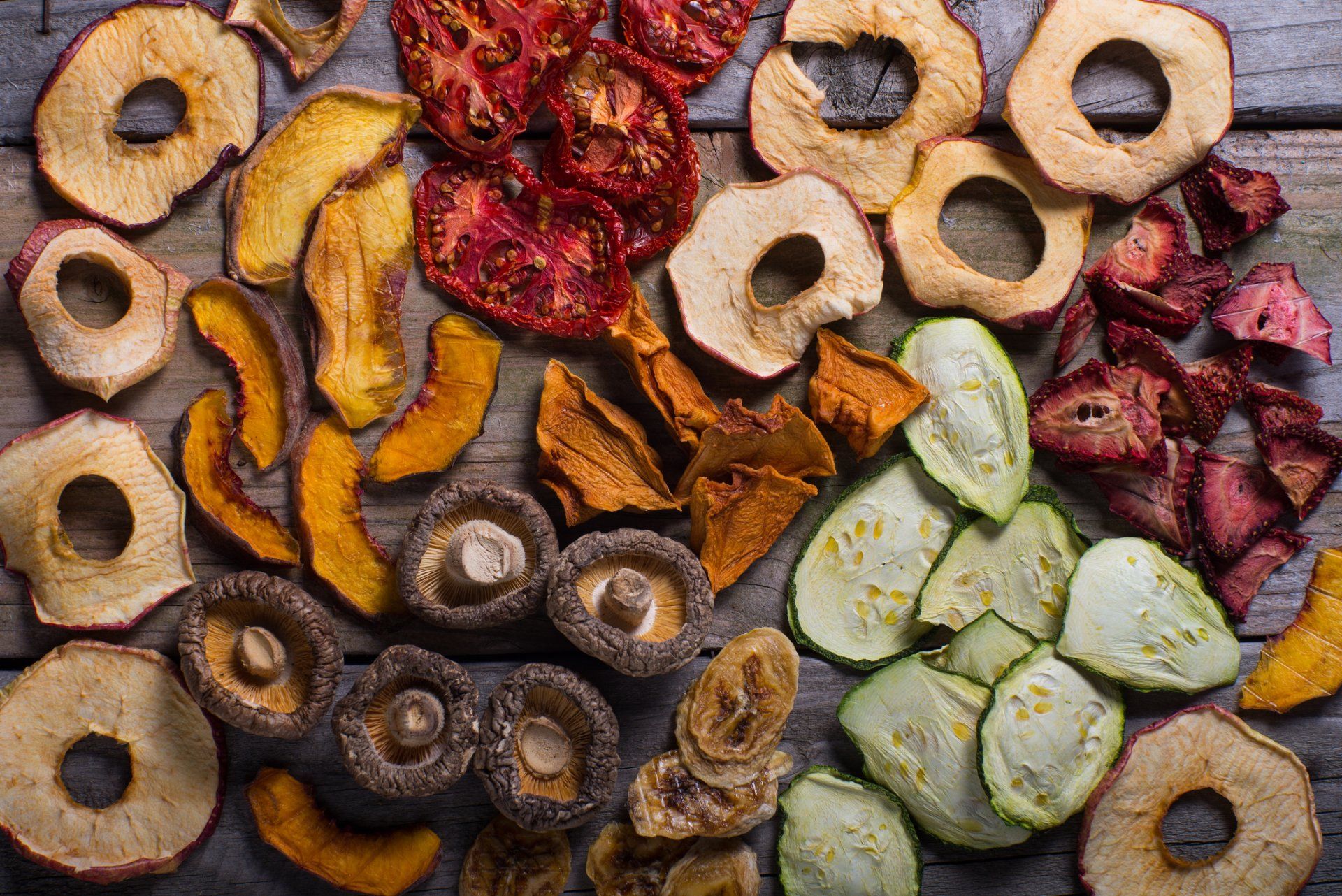
Fruits like strawberries, peaches, tomatoes, and vegetables like cucumbers and zucchinis; typically have very high moisture content, often around 90% to 95%. Dehydrating these items can take approximately 6 to 12 hours in a standard dehydrator (varies by thickness). The high initial water content means these foods need a longer duration at a controlled temperature to remove moisture effectively without cooking the food.
Medium Moisture Content Foods
Items like carrots, apples, and meats fall into this category. Their moisture content can range from 50% to 85%. For example, apples, which have about 80% water, generally require around 4 to 10 hours (varies by thickness) to dehydrate properly.
Meats, which need to be dried thoroughly to prevent bacterial growth, might take longer, typically 8 to 12 hours, depending on the thickness and initial moisture.
Low Moisture Content Foods
Grains and legumes like lentils, chickpeas, and beans have lower moisture contents, generally around 10% to 20%. These can be dehydrated in about 3 to 8 hours (varies by thickness). Since they start with less moisture, the process is quicker but still requires temperature management to ensure even drying without overcooking.
The variability in drying times underscores the importance of starting with an accurate measurement of moisture content.
Knowing the specific moisture level allows for better control over the dehydration process, helping preserve the food's nutritional content, flavor, and texture. Effective moisture management during dehydration not only extends the shelf life of food but also enhances its convenience for storage and later use.
Remember, these times are approximate; factors such as the thickness, type of equipment, and ambient humidity can influence the actual drying time